On being a newly arrived immigrant in the middle of the COVID-19 outbreak
Things were going so well.
I had arrived in Iceland, and while I was initially a bit homesick, things were good. I was finding my feet – I met up with another recently arrived immigrant for coffee, I found a yoga class – heck I found an aerial silks class – and joined a running group. And then, COVID-19 arrived in Iceland. Well, shit happens.
Before I moved to Iceland, and when COVID-19 was just getting serious in the UK, my mum said to me “At least you’ll be safe from coronavirus there.” Obviously that wasn’t the case, and in fact everyone here knew, despite the fact we’re on a tiny island in the North Atlantic, that it was always going to be a case of when, not if, coronavirus hit Icelandic shores. And it came the way it has arrived in many European countries, via those returning from ski trips in Italy and Austria.
At first, no-one was particularly worried. You saw more bottles of hand sanitiser around and people stopped hugging and shaking hands, but really it was business as usual. And then we had the first cases of community transmission, and suddenly cases had leapt from 2 to 171 – a very high number of cases per capita in a country of 360,000 residents. It all got a lot more serious very quickly.
At the end of last week, Iceland followed in the footsteps of many other countries by announcing an assembly ban, which came into force today. Meetings over 100 people are banned, and residents have been strongly advised to keep 1 – 2 metres distance from anyone else. The latter has caused a certain sense of uncertainty here – unlike the more stringent measures taken in Italy and Spain which has mandated the closing of cafes, restaurants, gyms etc, there is no government mandated rule that these have to be closed here – although functionally of course it would be impossible to visit any of these locations while maintaining adequate social distancing.
A further point of contention here is that there has been no effort made by the government to halt tourism into the country. This is obviously a really tricky situation – Iceland’s economy is heavily dependent on tourism, and the crash of 2008 is still very fresh in the minds of many people here. Many people are arguing that a sense of normalcy should continue as long as possible, so Iceland has a hope of having a still functioning economy once this crisis has passed. And then you have another set of people furious that the government aren’t putting in place more stringent measures around tourism, and that we’re sleepwalking into a major national health crisis.
So what is it like being a newly arrived immigrant in a country under semi-quarantine?
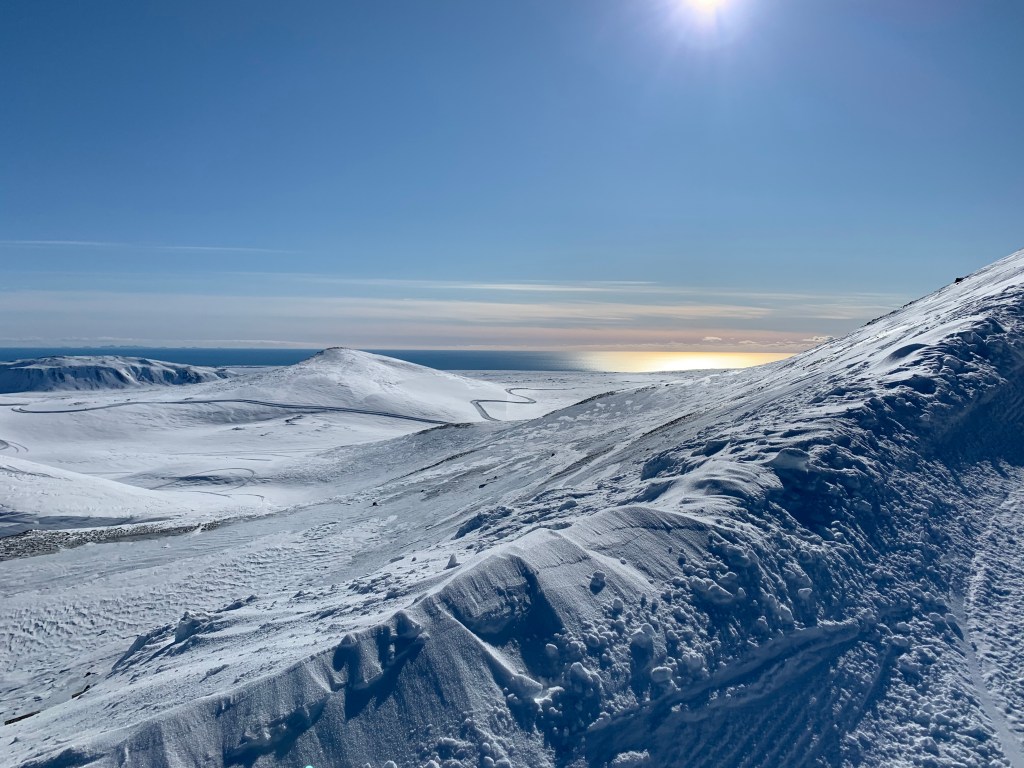
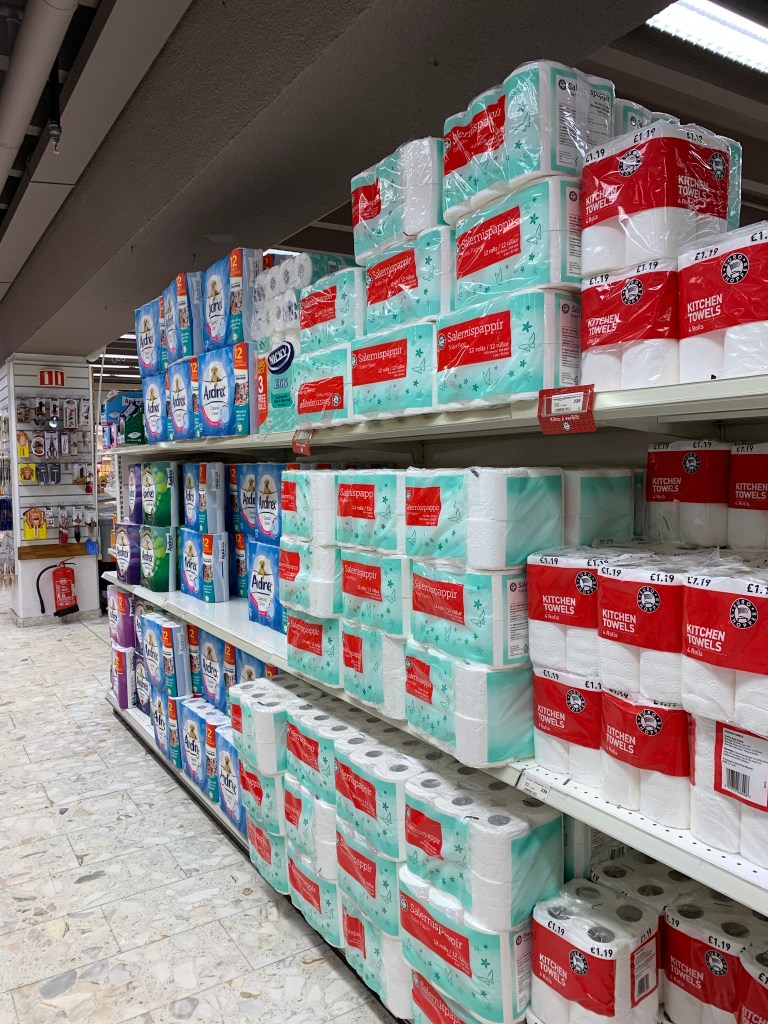
It’s boring, but it is bearable. The good thing about being under an advised, rather than mandated quarantine, is it is still possible to get out and about – carefully. I was lucky enough to be able to drive to a small ski resort just outside of town at the weekend, I can go to the supermarket as long as I’m careful about maintaining distance, and I can go for long walks along the beautiful coastline.
The one good thing about being at home a lot and having a lot of free time is that it is forcing me to actually pick up my books and push forward my Icelandic learning. Also one of the subscription channels here has made a load of its content free during the crisis, which means I have free access to a load of children’s TV shows – a great way to improve my Icelandic. My current favourite watches are Doddi (Noddy in English), Pósturinn Páll (Postman Pat) and Kóala Bræður (Koala Brothers – a silly pre-school age cartoon about two koalas living in the Australian outback).
Another brilliant thing about living in Iceland during a crisis like this is that the social contract here is immensely strong. In a city of 122,000 people a lot of people know each other, or you speak to someone and find that you both have a mutual friend in common. People look out for each other here in a way they don’t in the UK – this is obviously part of what makes Iceland such a safe country, and was a huge draw to move here.

Last week, a company out here called deCODE genetics announced they were offering free coronavirus screenings to any resident of Iceland, regardless of risk factors. deCODE has not been without controversy – a private company initially set up in 1996 with the aim to create an Icelandic Health Sector Database containing the medical records of all Icelanders – it has attracted a lot of criticism over the years from people worried about consent and potential privacy violations. However almost universally the opinion here is immense gratitude towards deCODE for this particular service. In fact, the offer was so popular the website immediately crashed and testing slots are now booked up a week in advance. With almost 1000 people being tested per day Icelandic scientists are able to learn so much about how the virus is spreading here – most notably it has been discovered a staggering number of positive results – up to half – have come from people who are asymptomatic. There is a lot of hope that with some good old collective social responsibility, this can be beaten.
Takk if you have read this far, and I hope everyone is staying safe and healthy.
 Góðan daginn ísland